



An eco-friendly and ethical satchel
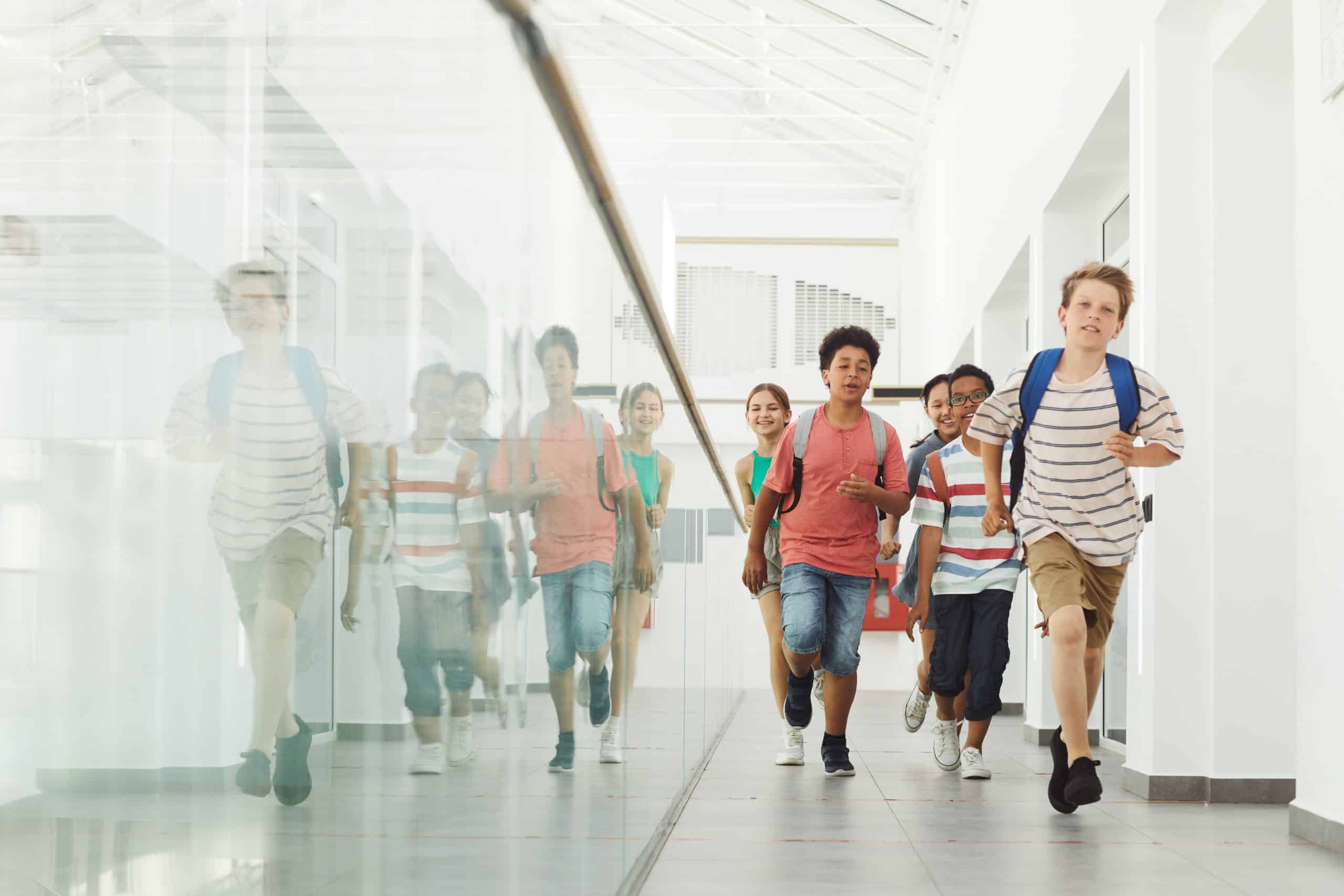
The contents of school bags deserve a closer look, both from an environmental and social perspective.
Back to school is an intense commercial period, and rising costs are frightening parents... and whetting the appetites of brands, whether for school supplies, clothes, or snacks. They have indeed made children a particularly coveted target to boost sales of often expensive and... ecologically and socially formidable gadget products. Thus, new products and brands can increase the back-to-school basket by 50% to 100%.
Therefore, how can one navigate between economy, children's satisfaction, environmental and health protection, and considering the social conditions of manufacturing?
The composition of a "responsible" school bag is a great opportunity to get a global understanding of one's consumption habits and adopt new purchasing and usage habits.
Some tips for changing habits
- Inventory unused supplies from previous years: some of them can still be used. Also, remember to re-use notebooks that have been lightly used.
- Teach your child to manage their stock of supplies to avoid waste.
- School is the second place for environmental education after the family: take advantage of back to school to raise children's awareness of environmental issues (product composition) and social issues (manufacturing conditions). You will make your children more attentive to their health, the quality of their environment, and lead them to become informed consumers and responsible citizens.
- Choose useful, repairable, reusable, and environmentally friendly supplies made from natural materials such as wood, metal, or leather, or from recycled materials and without toxic products.
- Prefer supplies with labels (FSC, NF Environnement, Ökotest recommendation...).
The NF Environnement eco-label for school supplies (notebooks, pads, blocks, covers, loose-leaf paper, and dividers) guarantees: their suitability for use, reduced energy consumption and emissions into the air and water during their manufacture, reduced hazardous substances used for inks, glues, cleaning agents, and fountain solutions during printing, improved environmental management (waste management, effluent management, staff training...). - Beware of short-term savings that lead to buying low-priced equipment that will need to be replaced several times during the year.
- Wherever possible, prefer products from fair trade.
Eco-friendly purchases
To buy eco-friendly in a market dominated by plastic, gadgets, and organized waste, markers, fluorescent highlighters, colored pencils, and graphite pencils must be evaluated according to different criteria: potential toxicity, quality and durability, environmental impact during the life cycle (from manufacturing to disposal), robustness, manufacturing conditions... For packaging, prefer bulk purchases or recycled cardboard packaging.
School bag and pencil case
Eco-friendly school bag
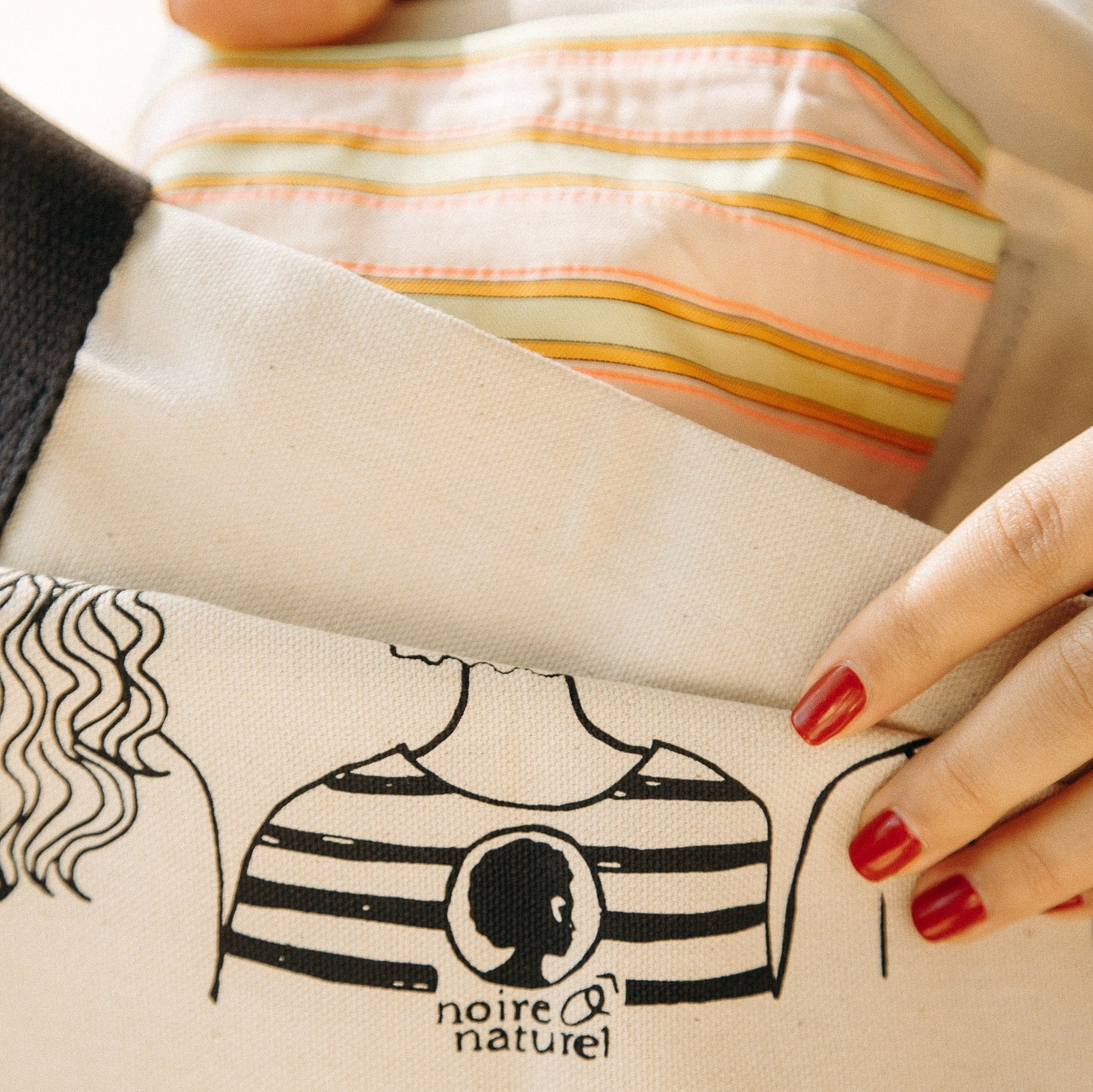
For the school bag or backpack, nothing beats leather or a 100% natural fiber, such as organic hemp colored with natural dyes.
Noireônaturel's point of view: Only buy a new school bag if necessary, it's much more eco-friendly and economical!
For pencil cases, there is a wide choice in leather or fabric. You can also opt for a wooden or metal pen case or make your own unique one from a box or fabric scraps.
Writing materials
It is best to avoid disposable items and those containing toxic substances. For this, prefer those marked "CE" and, on the packaging, the mention "European safety standard EN71". This means that these products comply with the toy safety regulations, which set the chemical, physical, and mechanical requirements that the manufacturer must respect.
Pencils
Choose refillable (plan for refills) and sturdy mechanical pencils rather than classic pencils. Otherwise, choose pencils made of natural and untreated material (e.g., FSC wood or recycled cardboard). Choose a graphite lead without heavy metals. Avoid disposable plastic mechanical pencils.
Colored pencils and paint
For colored pencils and paint, choose uncolored and unvarnished pencils, preferably marked "CE", and natural paints with food-grade dyes.
Pencil sharpener
A non-treated wooden pencil sharpener with the FSC label and a recycled cardboard reservoir should be preferred.
Fountain pens and ballpoint pens
A reservoir pen is preferable to a cartridge pen, but refillable cartridges exist. Let's abandon disposable ballpoint pens. Let's prefer refillable ones (rollerball type).
Felt-tip pens
Choose washable felt-tip pens without toxic products, water- or alcohol-based, and with food-grade dyes. To extend their life, remember to close them immediately after use.
Markers and highlighters
No marker inherently presents an eco-friendly image: made of plastic, packaged in plastic, etc. Due to their toxicity (presence of organic solvents and heavy metals), identifiable by their strong odor, most markers should be avoided. Nevertheless, some are more eco-friendly than others. They should be chosen water- or alcohol-based (for some uses) and refillable. Markers can also be replaced by fluorescent colored pencils. Some manufacturers offer refillable highlighters, with a wide, rounded tip, whose body is made of wood or polypropylene (less damaging to the environment than PVC).
Erasers, rubbers, and correction fluids
Ink eradicators, erasers, and correction fluids: It is better to choose a natural rubber eraser (opaque beige) than a plastic eraser. Avoid soft scented erasers: they are dangerous because children, attracted by their pleasant smell, may suck and swallow them. Avoid erasers with cases, as these are useless.
Ink eradicators contain soap, soda, and sodium thiosulfate, sometimes even formaldehyde, substances that are not without risk. Therefore, they should never be put in the mouth to moisten them, even if they dry out. Liquid correction fluids are composed of toxic solvents (indicated by the St. Andrew's cross: black cross on an orange background). Therefore, prefer those based on alcohol or water. Be careful, this type of product is not suitable for use by children. They are also prohibited in some schools. Recently, correction tape dispensers have appeared on the market. Refillable ones are available.
Stationery
Notepads, notebooks, sheets,... all are available in 100% recycled, unbleached paper. For binders, folders, or document wallets, choose recycled cardboard with reinforced corners. There is book cover paper made from recycled materials and repositionable Post-it notes made from recycled paper. Even recycled, paper should not be wasted. Our consumption can be reduced: by writing on both sides of the paper, by reusing blank pages from old notebooks for drafts. And remember to participate in selective collections of old papers.
Glues and adhesive tapes
The toxicity of glues is mainly due to the resins and solvents they contain. Organic solvents such as toluene, formaldehyde, and acetone are volatile and responsible for the characteristic odor of some glues. Their inhalation is dangerous. For common uses, a solvent-free, water-based glue is perfectly sufficient. It is best to choose it in large pots or bottles, if possible with the German Ökotest label. Eco-friendly adhesive tapes are PVC-free and solvent-free. The dispenser is made of wood or recycled material. These adhesive paper rolls can be made of cellulose or rubber.
Small equipment
Compasses: choose a natural wood compass labeled FSC, for example, or a metal one.
Staplers: Staple-free staplers work by cutting and folding: the machine makes an incision in the sheets and folds the paper behind. The stapler only works with about fifteen pages maximum. The big advantage is that it is possible to detach the sheets easily without tools.
Calculators: solar or water-powered calculators are available.
Rulers and set squares: unvarnished and undyed wooden ruler or metal ruler.
Scissors: metal scissors with handles made of recycled ABS. ABS is a noble plastic that combines resin and elastomer and gives a shiny, aesthetic appearance, very scratch-resistant, and easy to clean with products.
Whiteboards and Slates: prefer slates with chalk.
Aprons: you can find aprons made of organic fabric or use an old shirt that you can personalize.
Snacks
They increasingly lead to bricks, cans, papers, plastic, aluminum, etc. Rehabilitate lunchboxes, reusable plastic bottles, or gourds." To go further.
Source Ecosapiens
So, is your child's school bag responsible? Tell us in the comments!
Read more
As the new school year begins, Noireônaturel is also making its comeback and offers you an ethical and solidarity-based school year! Happy back to school everyone."It's not easy, in the rush of bac...
copyright l’observatoire des cosmétiques I wonder: when I see the rise of certain "organic" cosmetic brands that are not even certified, displaying the "organic" label and having an ingredient list...


Leave a comment
All comments are moderated before being published.
This site is protected by hCaptcha and the hCaptcha Privacy Policy and Terms of Service apply.