

Organic soaps for black, sensitive, or fragile skin
Nowadays, soap is used daily by a large majority of the population. Indeed, it plays an essential role in hygiene, especially due to the desire to use healthy and natural products. However, it is still difficult to be informed about its manufacturing process or its different variations.
Moreover, we know that Black skin is particularly sensitive and needs nourishment, so it is important to choose an organic soap adapted to the needs of your Black skin.
Choosing the right organic soap for Black skin

One can quickly feel overwhelmed and confused about which one to choose. A little clarification seems necessary and will allow you to choose the soap that suits your desires and needs.
The question arises even more if you have black, dark or mixed-race skin, as you then have (very) dry or even atopic skin.
You must then choose the best soap so as not to aggravate the natural dryness of your skin!
Solid soap: what is it?
Solid soap is the result of a chemical reaction between a fatty substance (a vegetable oil or butter) and a strong base (soda) in the presence of water. This reaction is called "saponification".
Oils and butters are mainly composed of fatty acid triglycerides. Thus, when soda is added, these oils and butters are "cut" into two parts. Two products are then formed: soap (which is a mixture of sodium salts of fatty acids) and glycerine (which is the byproduct of saponification but also a very moisturizing substance for the skin and often used in cosmetics).
Moreover, in addition to fatty acid triglycerides, vegetable oils and butters contain an unsaponifiable part. These are compounds that will not react with soda. These are substances that contain vitamins E (phytosterols, tocopherols) and vitamins A (squalene, fatty alcohol...).
These substances have interesting virtues for the skin such as nourishing, antioxidant, softening, protective, emollient effects...
Cold saponification
Saponification is a slow but complete process. It continues until one of the two active ingredients (oil or lye) is exhausted. To ensure that no lye remains in the final soap, there must be an excess of oil, meaning there is not enough lye to convert all the oil into soap. Saponification will then stop when all the lye is consumed.
As for the excess oil, i.e. that which is not saponified in the final soap, it is called "superfat" of the soap. This "superfat" provides nourishing and softening properties to the soap. This helps protect and nourish the skin, which will be all the more important if you have black to very dry skin.
A long process
This is a manufacturing method used by master soap makers. It is carried out at low temperatures, around 30°C, which allows the properties of the vegetable oils used to remain intact.
Cold saponification involves a "cure" of at least 4 weeks after manufacturing. This cure corresponds to the drying time but it is also the ideal time to allow saponification to complete.
As we mentioned earlier, cold saponification produces superfat. The superfatting rate is the percentage (of the total weight of oils) that remains unsaponified in the finished soap.
There are two ways to superfat soap:
1) By reducing lye
This involves using less lye than is normally necessary for saponification. In this way, the lye will be completely consumed by saponification. A portion of unsaponified oil will then remain in the final soap.
2) With additional superfatting at the trace stage
This consists of adding vegetable oil (or a previously melted vegetable butter) at the "trace" stage, which corresponds to the end of preparation. This oil will remain unsaponified. This can be particularly interesting for vegetable oils and butters whose properties one wishes to particularly benefit from.
Moreover, this method can also be useful when one wishes to pre-disperse other ingredients that one wants to add to our final soap (colorants, essential oils...). This facilitates their homogeneous distribution in the soap paste.
Furthermore, the choice of oils during the soap's composition will greatly influence the soap's appearance and properties: particularly its hardness, lathering power, and gentleness on the skin.
Generally, the fatty acids that will provide hardness to the soap are saturated fatty acids. These are naturally and strongly present in "solid" oils and vegetable butters. To obtain a soap with good hardness, the amount of saturated fatty acids should be between 30 and 60%.
Next, there are fatty acids that will provide cleansing power. This is particularly the case for lauric acid. However, it is advisable not to use this type of fatty acid at more than 30% because the soap would be too detergent and aggressive. The correct amount is between 15 and 30%.
Finally, unsaturated fatty acids (oleic, linoleic) are very interesting in saponification for their nourishing properties. They are notably present in liquid vegetable oils such as: olive oil, apricot kernel, Macadamia, sweet almond, avocado, hemp.
Advantages of cold saponification
The advantage is, besides the fact that the soap's composition is as rich as possible, the great diversity in the soap's composition. By adapting and adjusting vegetable oils according to their properties, a soap can be obtained that treats a specific need (softening, nourishing, foaming power). Furthermore, a superfatted soap is much gentler than a classic soap.
Moreover, the reaction temperature (ambient) preserves the intrinsic qualities of the active ingredients used, as the molecules will not be denatured by heat. The "cure" allows the soap to complete its saponification correctly. Thus, the soap improves. It will melt less quickly than a hot-process soap and will therefore last longer.
Recognizing an artisanal soap
The shape, feel, or even transparency of the soap can be good indicators!
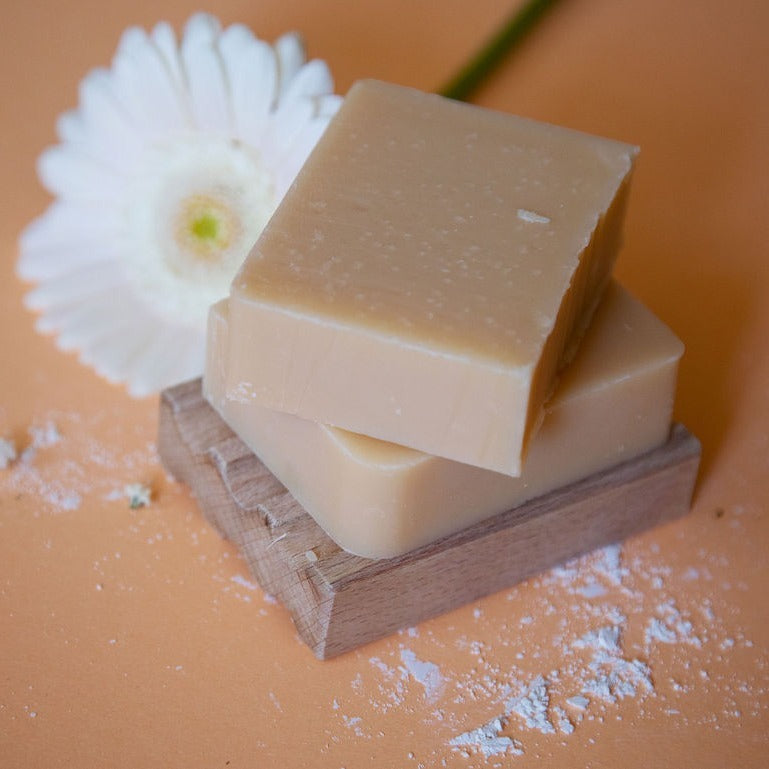
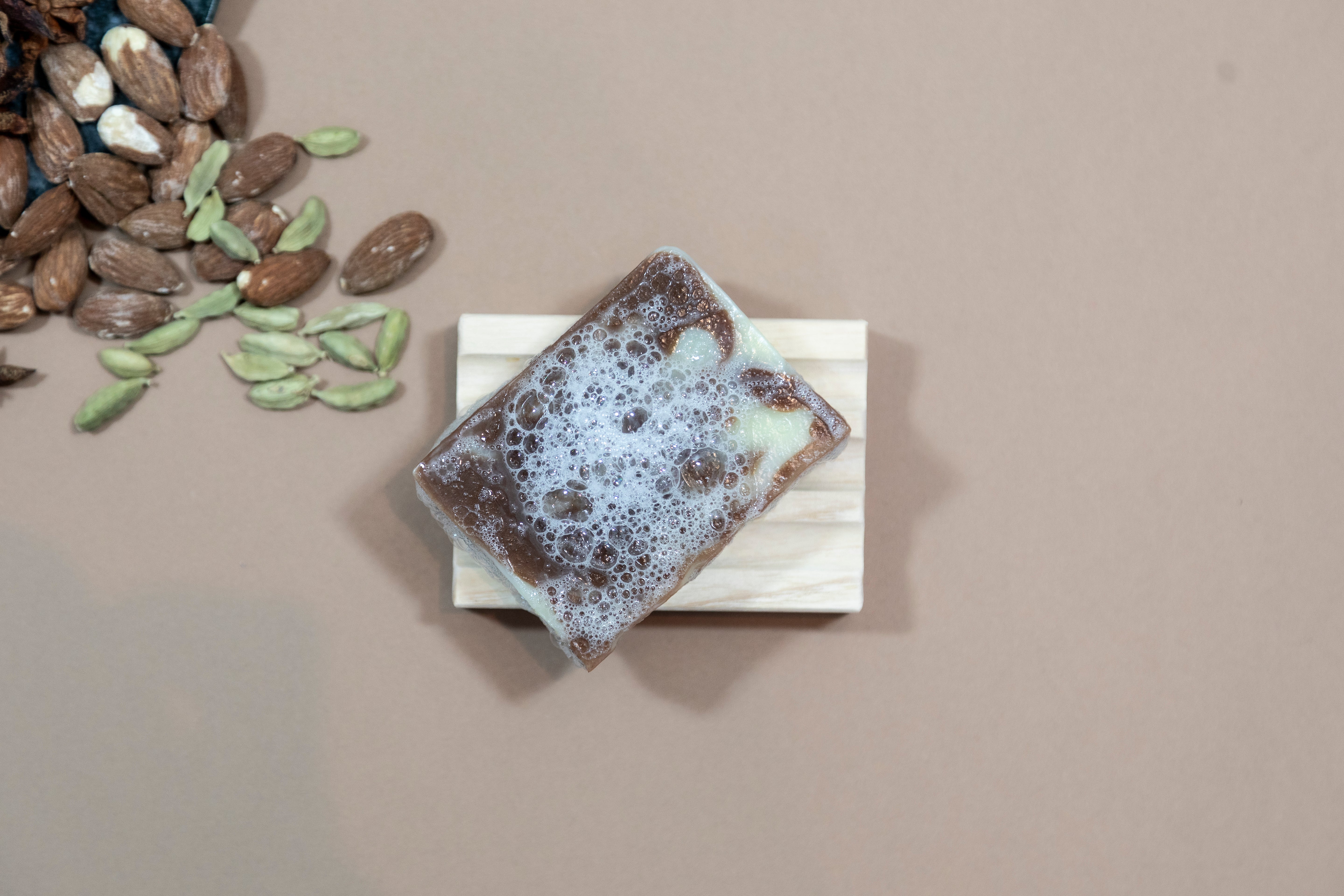
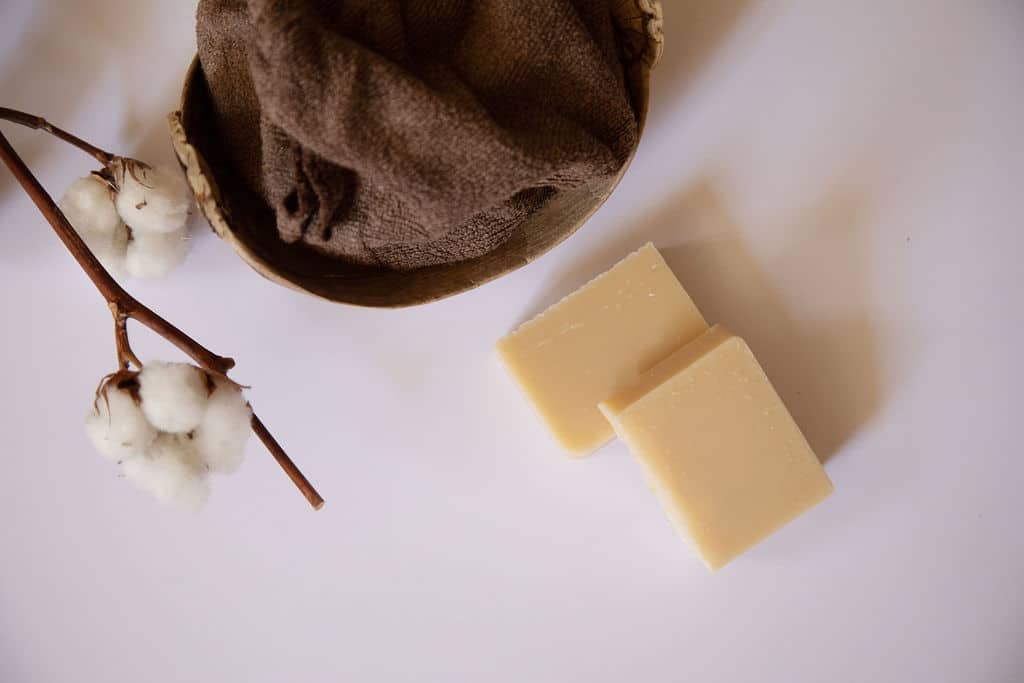
Generally, cold-process soaps are rectangular, with fairly wide edges and appear to have been hand-cut. They are also greasier to the touch, less homogeneous, and less rough than industrial soap. Moreover, when a cold-saponified soap is held up to a light, it appears slightly translucent. In contrast, an industrial soap will remain completely opaque.
The cold saponification method is used for making artisanal soaps. However, several methods differ according to the different types of soaps. Indeed, the technique will not be the same for an industrial soap or a Marseille soap.
Industrial soap
It is most often made from palm oil or animal fat, hence its low cost. It is also hot-processed (nearly 100°C) to speed up the saponification process.
The manufacturing process can be continuous, where the soap formed during saponification is separated from the residual oil. Alternatively, the process can be discontinuous. This means that the reaction ends when all the oil is transformed into soap. Glycerin, naturally formed in the soap, is extracted during washing, thus removing the soap's natural moisturizing properties.
At the end of the process, only the soap remains, which, by itself, dries out and "tightens" the skin. Industrial soap requires no drying and can be sold almost instantly.
Marseille soap

The historical manufacturing basin for Marseille soap is the Marseille region. True Marseille soap is a hard soap, made from vegetable oils, without perfume, dye, preservative or additives.
Authentic Marseille soap is made in a cauldron at 100 or 110°C, according to a specific saponification process called the "Marseille process" which contains 5 steps.
The saponification of Marseille soap
- "Emulsion": the mixture of soda lye and vegetable fats is heated and brought to a boil in a cauldron. It is gradually transformed into soap.
- "Salting out": this operation consists of adding a very dense saline solution to carry the excess lye to the bottom of the cauldron (the lye "salts out"), which allows the soap to remain on top.
- "Cooking": this allows for the complete transformation of fats into soap by adding concentrated soda lye.
- "Washing": the soap paste is refined by washing.
- "Liquefaction": this is the final wash with clear water, which brings the soap to its final state. This leaves a pure and smooth soap.
Beware of counterfeits, however! The name "Savon de Marseille" has never been protected. Thus, it can be found on many soaps that do not necessarily respect the traditional composition of Marseille soap. These may contain perfumes, additives, dyes, animal fats, etc.).
Some tips for recognizing real Marseille soap: it has a specific cube shape. Green if it is made with olive oil or beige if it is made with palm oil. It cannot be another color (pink, blue, purple...) and is composed of 72% oil or pure vegetable matter.
Noireônaturel organic soaps for Black skin
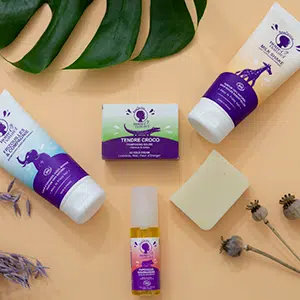
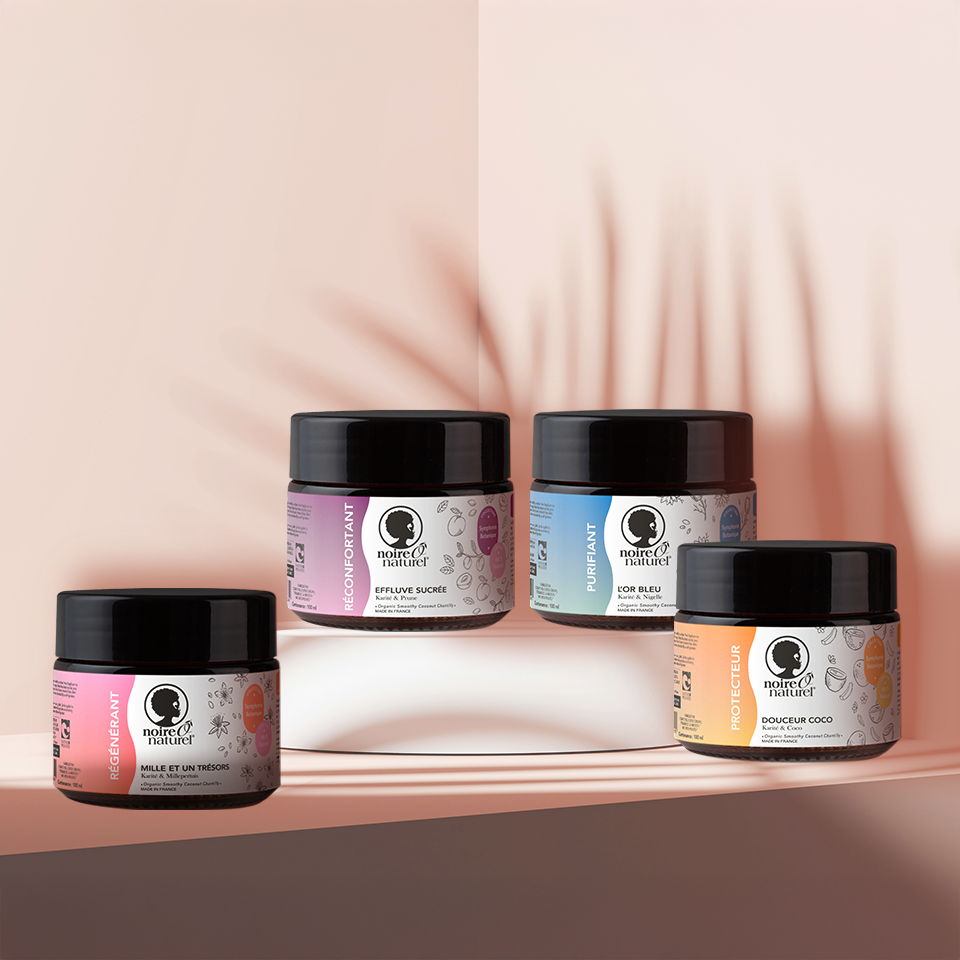
Noireônaturel offers a range of four natural soaps made in France using the cold saponification technique, adapted to the issues of Black skin. Our soaps are made from natural vegetable butters (shea, cocoa). But also organic natural oils of avocado, jojoba, sesame, apricot kernel, coconut, argan and sweet almond.
Palm oil-free, they are cold-saponified, superfatted and naturally rich in natural glycerine. It is known for its nourishing, moisturizing and softening properties.
Our soaps are ideal for black, fragile and/or dry skin, as they provide maximum hydration to the skin.

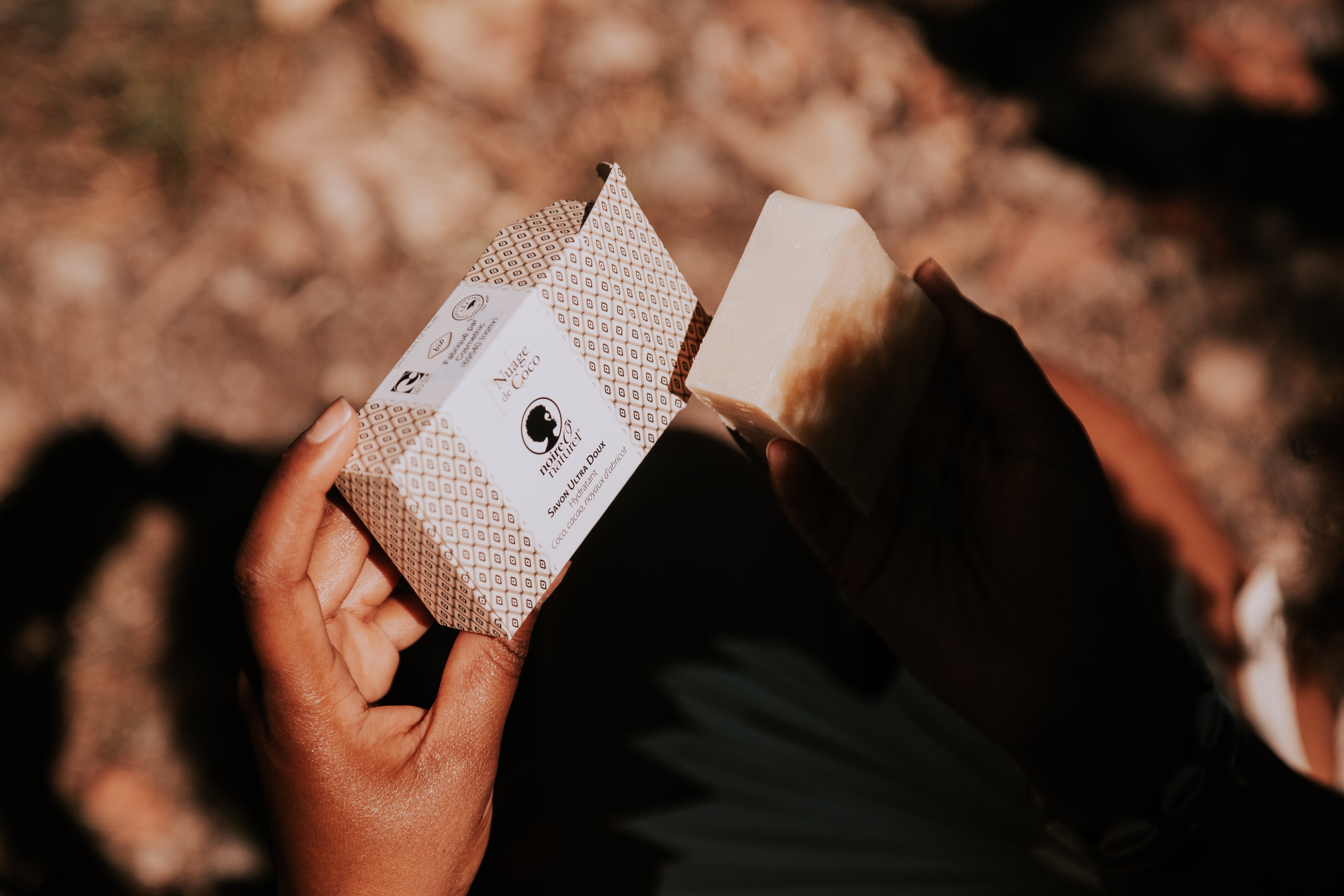
Organic fragrance-free superfatted soap: Nuage de Coco
Superfatted at 10%, it is the richest and gentlest of the 5 soaps we offer. Indeed, it is composed, among other things, of shea, cocoa, hemp, apricot kernel, and coconut milk, all recognized for their nourishing and moisturizing qualities.
It is fragrance-free and essential oil-free, which is ideal for black, dry, sensitive and reactive skin, as well as for children and pregnant or breastfeeding women. Moreover, this soap produces an abundant, soft and very creamy lather.

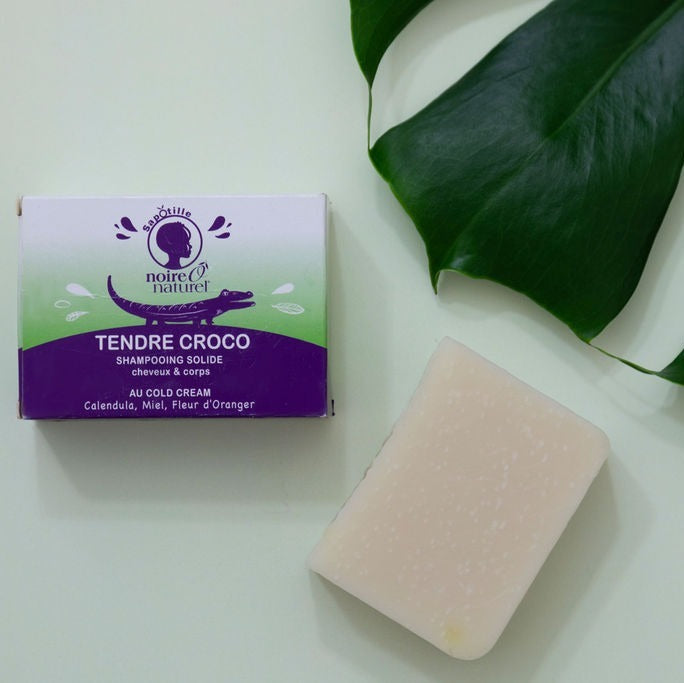
Gentle organic body and hair soap for children: Tendre Croco
Inspired by the traditional "Cold Cream" recipe (a cream that provides a refreshing effect, known for its nourishing properties). The organic plant active ingredients present in the soap (honey, orange blossom, chamomile, sweet almond oil, calendula) help combat flaky skin and the "crocodile skin" effect.
This soap is therefore very suitable for children but also for all skin types, especially sensitive and reactive skin.

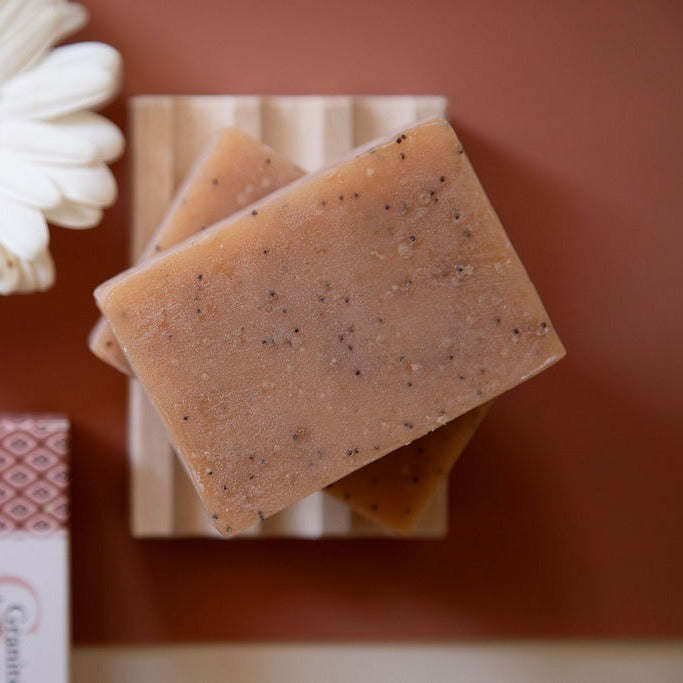
Organic exfoliating soap: Granité de Goyave
Argan, Sweet Almond, Poppy provide natural exfoliation thanks to Poppy seeds. It is notably composed of precious organic plant active ingredients: Shea, Cocoa, Coconut, Argan, Sweet Almond Oil.
Its exfoliating function helps to get rid of impurities while leaving the skin soft and hydrated.

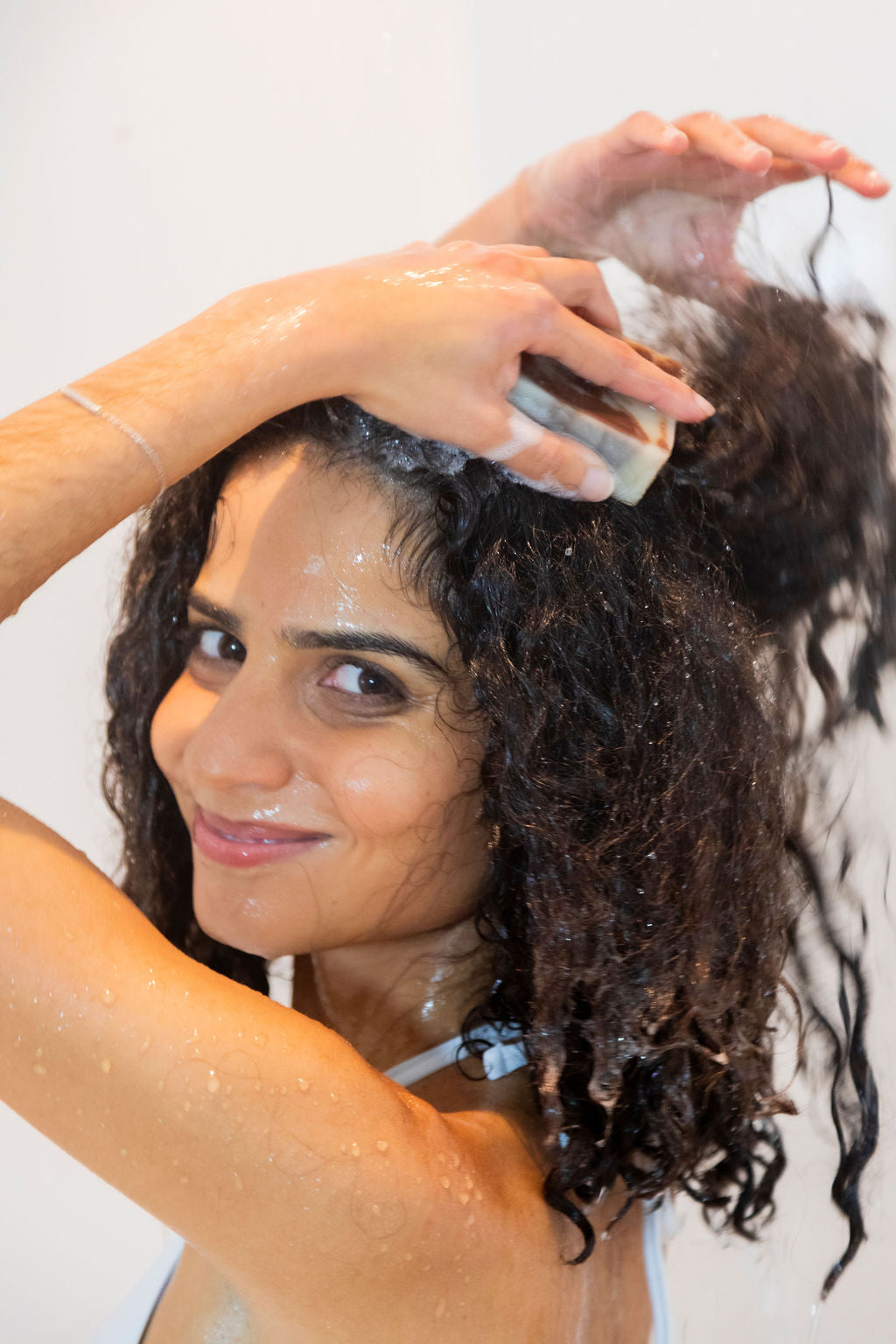
Organic hair soap and solid shampoo: Amour de Tortilles
Composed of organic vegetable oils with recognized hair benefits: castor oil, sesame, jojoba. It is particularly suitable for braided, locked, and natural hair.

Noireônaturel is a member of the Association Des Nouveaux Savonniers (ADNS), which brings together French soap manufacturers who work using the cold saponification method. The soaps are also "organic" certified by Nature et Progrès, which guarantees the origin and composition of your products.
Storage of solid soaps
Cold-saponified soaps melt easily if they remain in water or in regular contact with water. For better preservation of this type of soap, it is advisable to dry them on a grid soap dish, preferably, so that they can drain and dry in the most optimal way possible.

Questions? Follow us on social media @noireonaturel for daily skin and hair tips!
Was this article helpful? Save it to Pinterest to find it later:
 .
. 

Our sources:
http://www.endouceheure.fr/sa-fabrication.html
"Cold Saponification"
http://www.aroma-zone.com/info/fiche-savoir-faire/la-saponification-a-froid
"Some tips for recognizing a cold process soap"<
https://www.gaiia-shop.com/blog/savons-naturels/quelques-conseils-pour-reconnaitre-un-savon-saponifie-a-froid-saf/
https://savons-et-cie.fr/Magazine/les-savons/le-savon-et-ses-techniques-de-fabrication
"Marseille soap"
http://www.savon-de-marseille-traditionnel.fr/Le-savon-de-Marseille_a22.html
"The short history of real Marseille soap"
http://www.lepetitmarseillais.com/article/la-petite-histoire-du-vrai-savon-de-marseille
"How to recognize real Marseille soap? 5 things to check"
http://france3-regions.francetvinfo.fr/provence-alpes-cote-d-azur/bouches-du-rhone/metropole-aix-marseille/marseille/comment-reconnaitre-veritable-savon-marseille-5-choses-verifier-534476.html
"Focus on cold saponified soaps in France"
https://echosverts.com/2016/08/09/zoom-sur-les-savons-saponifies-a-froid-fabriques-en-france/
Read more
In this article, we will break down the benefits of hair transition, the key steps to a successful transition, and the difficulties you may encounter on your journey to a 100% natural routine.
Well, it's back to school, and with it, we're forced to meticulously scrutinize the curly hair of our favorite brunette heads! Which, you'll agree, is a daunting task, because adult lice, also brow...


Leave a comment
All comments are moderated before being published.
This site is protected by hCaptcha and the hCaptcha Privacy Policy and Terms of Service apply.