



Rosehip oil: a natural beauty ally for Black skin
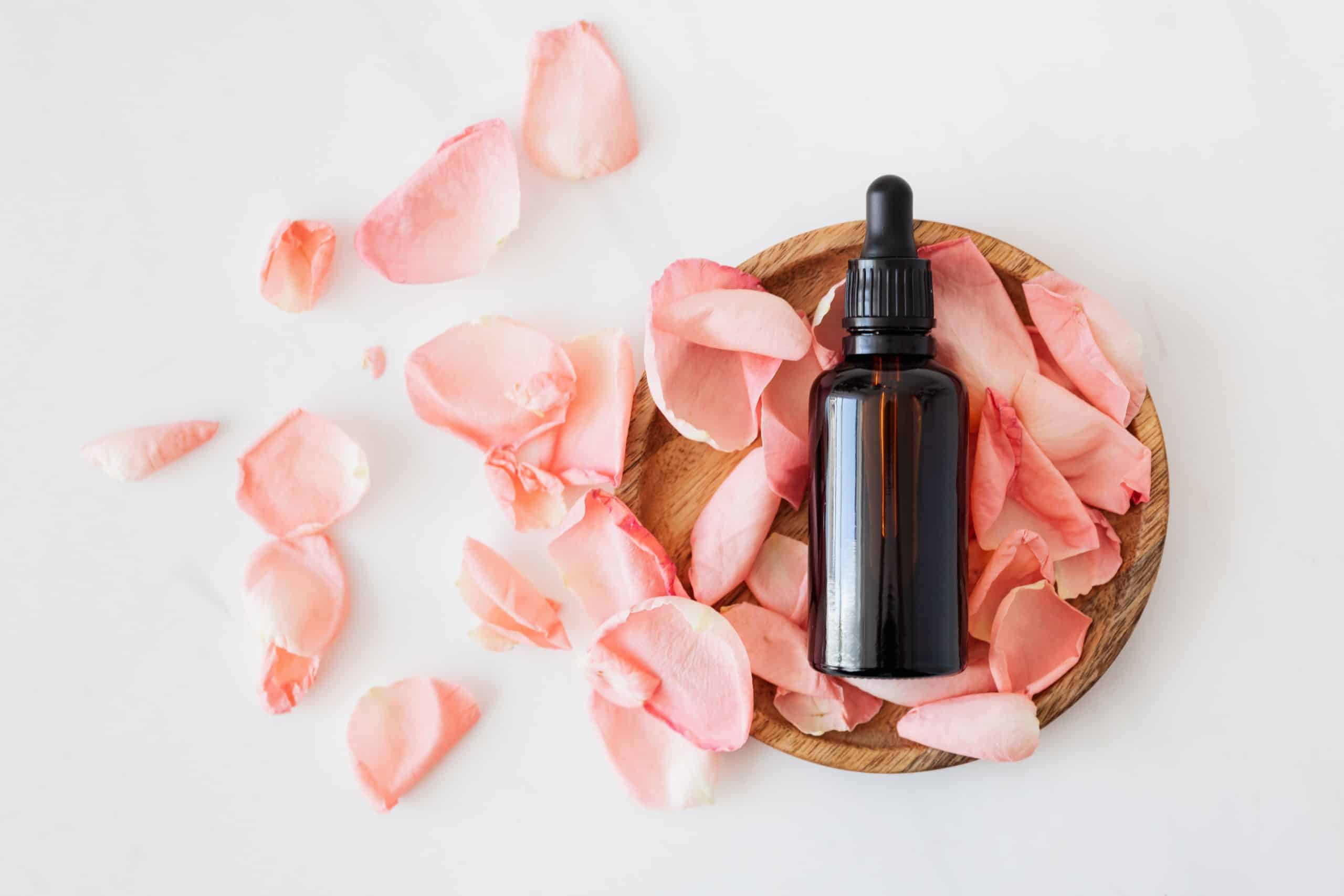
© Elena Schweitzer
What is rosehip oil used for?
Recently, several of you asked us on Facebook, following our article on Le Coin Bio, about natural or organic cosmetics that could gently and naturally act on "our famous" dark spots. Well, after some research, I found this.
I myself am a fan of rosehip oil, which is highly renowned for its regenerating and healing properties, and is also recommended for the prevention and reduction of stretch marks, but I haven't yet had the opportunity to use it as an "anti-spot" treatment.
How to use it?
I advise you to first test it on a small area and to prefer organic if the results are convincing, then why not extend it to the face. Don't hesitate to ask for advice from sales assistants or your dermatologist.
One of the main uses of rosehip oil is for its anti-spot action. Lots of sun, maybe a baby on the way... yet, dark spots on the skin are never welcome. An even, golden tan, yes, spots no. Unfortunately, without a minimum of precaution, the two too often go together.
Indeed, hyperpigmentation of the skin, which most often appears on the face, décolletage, hands, or even the upper back, is a sign of melanocyte overactivity, responsible for skin color. Overstimulated by the sun, they no longer distribute regularly. But other factors contribute to the appearance of dark spots; such as contact with chemicals, old burns, repeated friction, or UV rays, which act on the skin exactly like the sun.
All these factors aggress the skin which reacts by producing melanin pigments. Fortunately, it is possible to regain brand new skin, thanks to Rosehip oil!
A closer look at this precious oil
Rosehip oil is a vegetable oil rich in essential fatty acids, extracted from the fruits (of the eglantine rose Rosa rubiginosa L.), widely used in cosmetics.
This rose, native to Europe, is cultivated particularly in Chile and Argentina where it has naturalized to the point of becoming an invasive plant. It is called rosa mosqueta there, but should not be confused with the species J.Herrm., which is the true musk rose, native to Asia.
Rosehip oil in detail
Rosehip oil for cosmetic use is extracted from rosehip seeds. This oil contains a high concentration of polyunsaturated essential fatty acids, linoleic, oleic, and linolenic. This richness in essential fatty acids gives it the power to regenerate skin tissues and cellular growth, which is the origin of its action on human aesthetics.
The reputation of rosehip oil began thanks to a study conducted in the 1980s by the University of Concepcion, Chile, and more recently by European Universities (Italy, Germany). In these studies, the astonishing healing property of Rosehip oil was proven on 180 patients with various scars.
This great regenerating power has awakened the interest of the cosmetic industry and millions of followers who recognize rosehip as an ally to their natural beauty.
The benefits of rosehip oil
Rosehip is used as one of the most powerful natural skin regenerators available. It causes no side effects, and is a great ally for:
- Facial skin: regular use of rosehip oil rejuvenates the skin, has an anti-wrinkle action, and acts on under-eye bags and dark circles. The vitamins and nutrients contained in rosehip help fight skin aging, smooth eyelids, soften and tone the skin.
- Body: the very rich composition of rosehip gives it a moisturizing action on the skin, giving the body's skin softness and a satin finish. This oil can also be used to treat certain skin problems like stretch marks and scars.
- Hands and joints: rosehip oil is an excellent moisturizer for the hands, which lose their texture over time.
Rosehip oil is also used on elbows, heels, and knees, to counteract the natural tendency of these body parts to dryness.
Origins of the plant
The rosehip (Rosa affinis Rubiginosa), is a wild plant of Eastern origin, which grows in a rainy and cold climate. Its stem and branches are thorny, its flowers white and pink (sometimes with yellow pigments).
This plant has been known in Europe for several centuries. However, it is mainly in the South American Andes (especially in the Chilean part) that rosehip is found. The natives of Araucania, Chile, already used this plant for multiple purposes. It is from the seeds of the rosehip that the oil of the same name, so appreciated by the cosmetic industry, is extracted.
Source: Andes beauty, Wikipedia, and Inkanat.com
Was this article helpful to you? Save it on Pinterest to find it later:
 .
. 

Read more

"Do we realize that we are the only ethnic group that deliberately and regularly uses dangerous chemicals on ourselves and our children?How can we show children that they can love themselves as the...
HEALTH. The dangers of skin bleaching explained "The Paris City Council has launched a campaign to prevent the dangers of black skin bleaching. © AFP A woman at a hospital in Dakar, Senegal, shows ...


Leave a comment
All comments are moderated before being published.
This site is protected by hCaptcha and the hCaptcha Privacy Policy and Terms of Service apply.